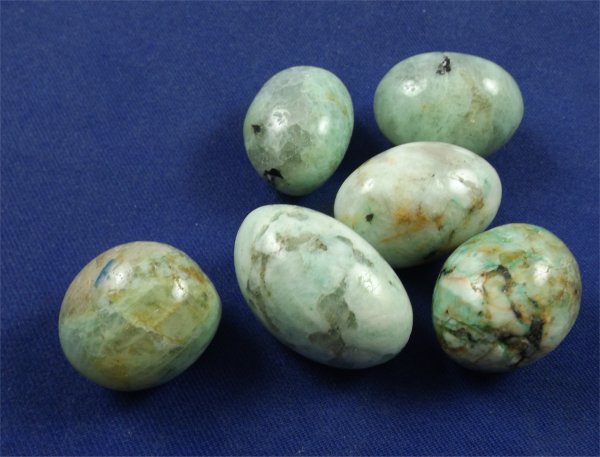
Phoenix Stone Tumbled Stone
Phoenix Stone Tumbled Stone
Phoenix Stone Tumbled Stone
Stone Type: TPhoenix Stone
Stone Cut: Tumbled Stones
Stone Weight: Varies
Stone Color: Blues - Greens
Size Stone Size: .9 - 1.4 Inches Long x .7 - 1 Inches Wide
Location: Brazil
History Of Phoenix Stone Tumbled Stone
The history of Phoenix Stone, a potent combination of Chrysocolla, Malachite, and Turquoise (sometimes with Quartz or Azurite), is a story of synergistic evolution. While each mineral within the stone has its own ancient lineage, the "Phoenix Stone" as a collective material represents the concept of Rebirth. Its history is tied to the copper-rich regions of the world where these minerals intermingle, creating a "living tapestry" of blue and green that has been prized by healers and architects of the spirit for centuries.
Understanding the Energy
Phoenix Stone is known as the "Stone of Transmutation." Because it combines the cooling communication of Chrysocolla, the protective transformation of Malachite, and the ancient wisdom of Turquoise, its energy is incredibly versatile. In tumbled form, this energy is rounded and fluid, acting as an "Emotional Alchemist." For the Soul-Architect, Phoenix Stone represents Systemic Renewal, providing the energetic "fire" needed to burn away old, stagnant structures and the "water" needed to grow new, vibrant ones in their place.
Geological Origins and Naming
- Composition: A complex silicate and carbonate mineral blend, primarily found in copper oxidation zones.
- The Name: The name "Phoenix Stone" is a metaphysical trade name, chosen because the stone's striking colors evoke the legendary bird that rises from its own ashes. It is also occasionally referred to as "Ailat Stone" or "Eilat Stone" (specifically the variety from Israel).
- The Tumbled Form: Creating a high-quality Phoenix Stone tumble is an art of balance. Because Malachite is heavier and Chrysocolla is often softer, lapidaries must use a precise "vibratory" tumbling process to ensure all minerals polish to a uniform, waxy luster without fracturing the delicate internal bonds.
Uses in Ancient Civilizations
- Ancient Egypt: The components of Phoenix Stone—specifically Malachite and Turquoise—were the "Jewels of the Nile." They were ground into eye paint for protection and carved into heart scarabs to ensure the soul's successful "rebirth" in the Field of Reeds.
- Ancient Israel: King Solomon's Mines in the Timna Valley produced a famous version of this blend (Eilat Stone). It was used in the construction of ornamental jewelry and sacred vessels, believed to carry the "Breath of the Creator."
- Native American Traditions: The Turquoise and Chrysocolla elements were used by Southwestern tribes as "Sky Stones," believed to bridge the gap between the Earth and the Great Spirit.
Cultural Context
Culturally, Phoenix Stone has always been associated with Diplomacy and Emotional Intelligence. In the 19th and 20th centuries, it was often carried by those in leadership positions to help them "speak from the heart" while maintaining a "cool head." It was historically given as a gift to those recovering from great loss or those starting a "new chapter" in their lives, serving as a cultural symbol of resilience and the inevitability of a fresh start.
Ancient Origins and Name
The ancient origins of this stone lie in the Proterozoic and Paleozoic eras, forming in the secondary enrichment zones of copper deposits. The name "Phoenix" connects the mineral to the Heliopolis myths of ancient Egypt, where the bird represented the cyclical nature of time and the immortality of the soul.
Historical Context
During the 1960s and 70s, Phoenix Stone saw a massive resurgence during the "New Age" mineral movement. It became a hallmark stone for the Divine Feminine movement, as its high copper content and blue-green hues were linked to the planet Venus and the goddesses of old. This shifted its historical narrative from a "resource of the mines" to a "tool of the heart."
Metaphysical Significance
Metaphysically, Phoenix Stone is used for Self-Expression and Shadow Integration. It is believed to help the user face their "inner fire" (the difficult parts of their past) and turn it into "inner water" (wisdom and peace). It is a stone of Total Transformation, teaching that you do not have to be defined by your past "burns"—you can use that heat to fuel your next great ascent.
Chakra Association
This stone is primarily aligned with the Throat Chakra. It acts as a "Communication Bridge," helping the Soul-Architect express their deepest emotional truths with clarity and structural integrity.
Modern Spiritual and Decorative Use
Today, Phoenix Stone Tumbled Stones are popular "Pocket Companions" for those undergoing therapy or career changes. They are used in "Renewal Grids" to invite fresh energy into a stale environment. Decoratively, their vivid "earth-from-space" appearance makes them a stunning addition to any workspace, serving as a visual reminder of the beauty that arises from complexity.
At Crystals By Rob
At Crystals By Rob, we are honored to have Phoenix Stone Tumbled Stones for the closing notes. This stone is a masterpiece of natural alchemy and resilient beauty. We recommend Phoenix Stone for the Soul-Architect who is currently in a phase of "deconstruction"—those who are letting go of the old to make room for the new. Its synergistic energy provides the courage to face change and the wisdom to speak your truth during the transition. At Crystals By Rob, we view these stones as the ultimate symbols of the "New Build," helping you to rise from the ashes of yesterday to architect a more vibrant, heart-centered tomorrow.
Product features
Product features
Materials and care
Materials and care
Merchandising tips
Merchandising tips
Share