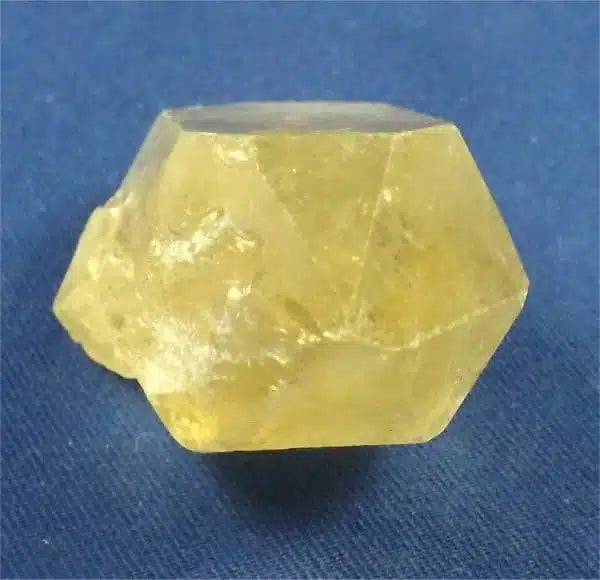
Citrine Crystal Point 3
Citrine Crystal Point 3
Citrine Crystal Point 3
Stone Type: Citrine
Stone Cut: Natural Crystal Point
Stone Color: Yellow
Stone Weight: 2.5 Ounces
Stone Size: 2.06 x 1.63 Inches
Location: Brazil
History Of Citrine Crystal Point
The history of Citrine Crystal Points is a narrative of solar energy and enduring prosperity. Known for centuries as the "Merchant's Stone," it was historically tucked into cash registers and purses to attract wealth. While natural citrine is a rare find in the earth's crust, its presence has been documented throughout human history as a symbol of success and the "crystallized" power of the sun. The point formation, with its natural or carved termination, has traditionally been used to direct this abundant energy toward specific goals or intentions.
Understanding the Energy
The energy of a Citrine Crystal Point is vibrant, warming, and expansive. It is one of the few stones that is said to never hold or accumulate negative energy; instead, it transmutes and dissipates it. The point shape acts as a laser-like conduit, focusing the stone's solar frequency to a single apex. This makes it an exceptional tool for manifestation, helping to clarify one's desires and project them into the physical world with confidence and joy.
Geological Origins and Naming
Citrine is a variety of quartz ($SiO_2$) that owes its golden hue to trace amounts of iron. The name is derived from the French word citron, meaning "lemon." Geologically, natural citrine forms when amethyst or smoky quartz is subjected to intense heat within the earth. In the modern market, many points are created by heat-treating amethyst to replicate this natural process. Whether natural or heat-treated, the "point" is either the natural termination of a crystal or is meticulously cut and polished from larger rough material to enhance its directive flow.
Uses in Ancient Civilizations
In Ancient Greece, Citrine was used as a decorative gem during the Hellenistic Age (between 300 and 150 BCE). It was often carved into intaglios and used for jewelry by the Roman Empire, who associated its golden glow with Apollo, the god of the sun and light. For these civilizations, carrying a citrine point or amulet was believed to provide protection against snake venom and "evil thoughts," while simultaneously ensuring the favor of the sun.
Cultural Context
Culturally, Citrine has been celebrated as a "Stone of Happiness." In many Eastern traditions, it is associated with the "Golden Ray" of wisdom and the accumulation of merit. During the Victorian era, it became a staple of Scottish jewelry, often featured in large brooches and kilt pins, symbolizing the warmth of the hearth and the resilience of the wearer.
Ancient Origins and Name
The naming of Citrine was formally established in the 16th century by the "father of modern mineralogy," Georgius Agricola. However, its use as "gold quartz" dates back much further. The ancients recognized the stone as a terrestrial embodiment of the sun, naming it after the brightest fruits of nature to reflect its ability to bring "ripeness" and fruition to one's efforts.
Historical Context
Citrine saw a massive surge in popularity during the Art Deco period of the 1920s and 30s. Hollywood starlets wore massive, faceted citrine points and steps to symbolize glamour and the "Golden Age" of cinema. Historically, the most significant deposits have been found in Brazil, Madagascar, and Russia, with the Brazilian mines remaining the primary source for the world's citrine points today.
Metaphysical Significance
Metaphysically, Citrine is the ultimate stone of manifestation and personal will. It is used to overcome feelings of unworthiness and to ignite the "inner fire" of creativity. A citrine point is frequently used in spiritual practices to "anchor" a vision. By placing a point on a written goal or in the center of a wealth grid, the practitioner is believed to be directing the solar force to bring that specific outcome to life.
Chakra Association
Citrine Crystal Points are most famously associated with the Solar Plexus Chakra (Manipura). This is the seat of personal power, ego, and manifestation. By clearing and energizing this chakra, citrine helps to build self-esteem and the courage to take action. It also stimulates the Crown Chakra (Sahasrara), helping to align personal will with higher divine purpose.
Modern Spiritual and Decorative Use
Today, Citrine points are essential for home and office decor to maintain a high-vibrational, optimistic atmosphere. They are often placed in the "Wealth Corner" of a home (according to Feng Shui principles) to invite abundance. Spiritually, they are used as wands in healing sessions to direct energy into specific areas of the body that require a boost of vitality and warmth.
At Crystals By Rob
At Crystals By Rob, we are honored to have the Citrine Crystal Point, a dazzling beacon of success and solar vitality. These points are meticulously selected to serve as your personal generators of abundance, helping you to direct your focus and manifest your highest aspirations. Whether you are looking to brighten your workspace with its golden glow or seeking a powerful tool for your manifestation rituals, our Citrine points are here to remind you of your own radiant potential. We invite you to explore our radiant collection at crystalsbyrob.com.
Product features
Product features
Materials and care
Materials and care
Merchandising tips
Merchandising tips
Share