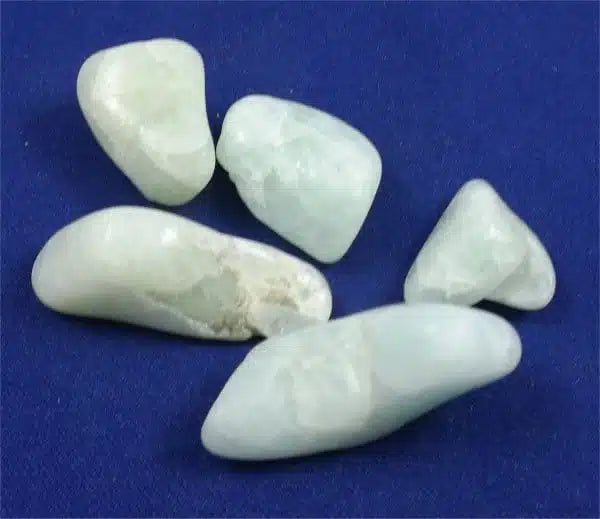
Aquamarine Tumbled Stones Medium
Aquamarine Tumbled Stones Medium
Aquamarine Tumbled Stones Medium
Stone Type: Aquamarine
Stone Cut: Natural Crystal Tumbled Stones
Stone Weight: Varies
Stone Color: Greenish Blue
Stone Size: 1.0 – 1.3 Inches
Location: Brazil
For each order of 1 stone, you will receive 1 stone at random from this lot
History of Aquamarine Tumbled Stones
The Aquamarine Tumbled Stone is a beautiful expression of the "Stone of the Sea," polished into a smooth, tactile form that mimics the natural weathering of pebbles on a shoreline. Throughout history, Aquamarine has been revered as a talisman of protection, clarity, and eternal youth. In its tumbled form, the stone loses its sharp hexagonal edges to become a "pocket-sized ocean," symbolizing the smoothing of life’s rough edges and the calming of emotional storms.
Geological Origins and Natural Formation
Aquamarine is the blue-to-green variety of Beryl, the same mineral family that produces Emerald. Its name is derived from the Latin aqua (water) and marina (of the sea), perfectly describing its crystalline clarity and oceanic hues.
The stone forms in pegmatite veins under intense heat and pressure. Its color is the result of iron impurities within the crystal lattice; more iron typically results in a deeper blue, while a mix can produce the classic "sea-foam" green. Tumbled stones are created from "rough" Aquamarine—the pieces that may not be "gem-quality" for high-end faceting but possess a stunning internal glow. When tumbled, the stone’s "shimmer" or "rain" (fine needle-like inclusions) is brought to the surface, creating a lustrous, water-like finish.
Ancient Use and Cultural Significance
For thousands of years, Aquamarine has been a stone of legend and lore.
- The Sailor’s Guard: Ancient Greek and Roman sailors carried Aquamarine as a protective amulet. It was believed to have originated in the jewel boxes of mermaids and was thought to calm the waves and ensure safe passage.
- The "Oracle" Stone: In ancient times, Aquamarine was used by seers to look into the future. Because of its clarity, it was believed to "wash away" deceptions, allowing the holder to see the truth of a situation.
- Medieval Medicine: During the Middle Ages, ground Aquamarine was used in various "healing waters" to treat ailments of the eyes and the throat, as its cool energy was thought to reduce inflammation and "quench" the heat of illness.
The Tumbled Form Through History
The history of "tumbled" Aquamarine is a history of the stone's accessibility. While faceted Aquamarine was historically a jewel of the aristocracy and church leaders (often set into the crowns of kings), the tumbled stone allowed the general public to benefit from its energy.
In the 20th century, the rise of the "rockhounding" movement and the invention of industrial tumblers allowed enthusiasts to take the raw, often opaque "Beryl" chunks and turn them into smooth, translucent gems. This popularized the use of Aquamarine as a "worry stone" or "pocket charm," emphasizing its tactile nature—carrying the peace of the ocean in one's hand rather than just wearing it as a formal ornament.
Evolution Into Modern Metaphysical Practice
In modern crystal traditions, Aquamarine Tumbled Stones are known as stones of "Courage and Letting Go." They are essential tools for:
- Throat Chakra Balance: Held or worn near the throat, they help overcome the fear of public speaking and allow for "fluid" communication.
- Emotional Soothing: Like the ebb and flow of the tide, tumbled Aquamarine is used to help one "flow" with change rather than resisting it.
- Meditation: They are often used in "water grids" to help quiet the mind and wash away the "mental chatter" of daily life.
At Crystals by Rob
Aquamarine Tumbled Stones are celebrated for their ability to bring a cooling, peaceful presence to the wearer. At Crystals by Rob, these stones are honored as symbols of clarity, protection, and emotional resilience—perfect for those who wish to move through life with the grace of the sea and the courage of the ancient mariners.
Product features
Product features
Materials and care
Materials and care
Merchandising tips
Merchandising tips
Share